
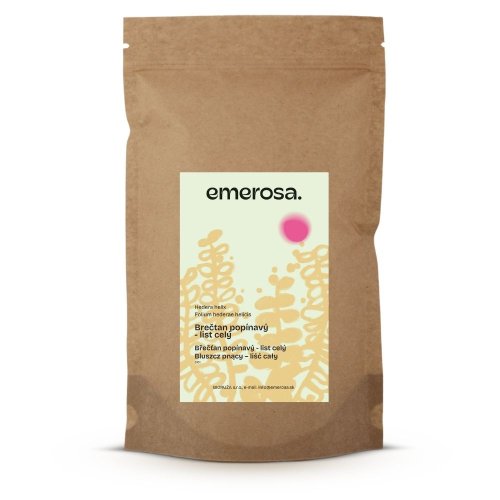


Common ivy - whole leaf - Hedera helix - Folium hederae helicis Emerosa
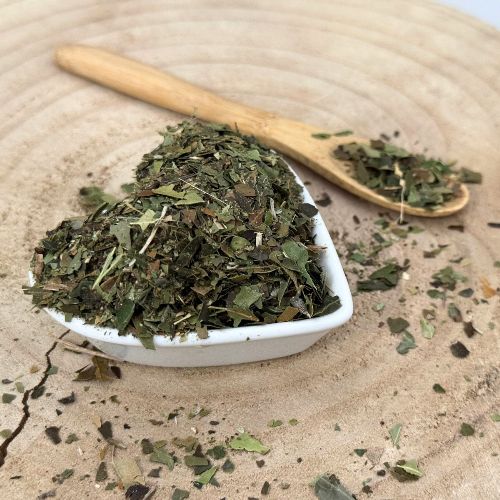
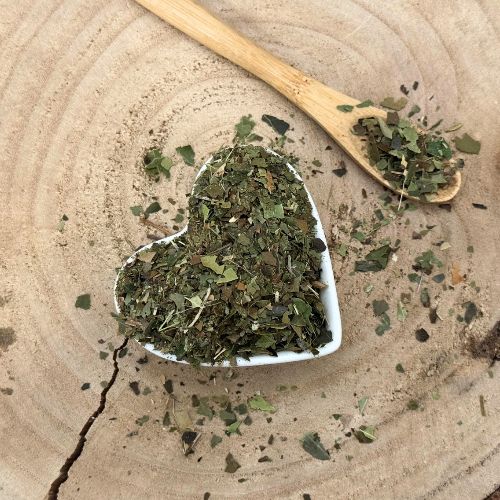
Common ivy is an evergreen climbing plant that you will recognize from the walls of houses and the trunks of trees. The dried whole leaf naturally contains saponins and flavonoids. In traditional herbalism, ivy was mainly used externally for compresses and baths. Ivy leaf is also a common ingredient in cough syrups. Whole leaves are easy to dose and are suitable for decoctions as well as herbal blends.

Why shop at Emerosa?
-

Loyalty program
We reward each product review.
-

Expert advice
We provide the best quality of services and products.
-
Reliability of delivery
Own warehouses guarantee speed and reliability of delivery.
-
Our products
We create quality products for you
-
Shop and save
Get up to 10% discount
-
Free shipping
for purchases over €60
-

Satisfaction guarantee
Does it not fit? Give it back.
-

Review reward
Review = up to € 1.2 back.
Emerosa Common Ivy - Whole Leaf, Hedera Helix, Folium Hederae Helicis
Common Ivy (Hedera helix) is an evergreen climbing plant from the Araliaceae family. It climbs walls, rocks, and tree trunks up to a height of 20 metres. It clings using small adventitious roots. Leaves on creeping shoots are dark green, leathery, and have three to five lobes. It flowers as late as autumn and its black berries are poisonous.
In herbalism, the leaves are harvested. They are dried whole to preserve their shape and active ingredients. Ivy leaf naturally contains saponins (hederin, hederacoside C), flavonoids, and chlorogenic acid. These saponins are the reason why ivy leaf is added to cough syrups available in pharmacies.
Properties and traditional use:
- Well-known cough syrup ingredient: Ivy leaf extract is added to many expectorant syrups.
- Compresses and wraps: In traditional herbalism, a decoction of the leaves was used for compresses and wraps on the legs, thighs, and hips.
- Herbal bath: The decoction was traditionally added to a bath for tired legs and strained skin.
- In cosmetics: Ivy extract is a common ingredient in creams and gels for the thighs and hips.
- Whole leaves: The whole leaf is easy to store, simple to dose, and easy to strain when making a decoction.
How to use and prepare:
- Decoction for compresses: Pour 500 ml of cold water over 2 tablespoons of leaves (approx. 5 g). Bring to a boil and simmer for 10 minutes. Allow to cool and strain. Dip a clean cotton cloth into it and apply to the skin for 15 to 20 minutes.
- Bath: Pour a decoction made from a handful of leaves and 1 litre of water into a bath with warm water.
- Homemade laundry detergent: Saponins from the leaves foam in water. Boil a handful of leaves in 1 litre of water for 15 minutes, strain, and use the decoction instead of detergent for dark laundry.
- Internal use: Ivy is used internally in very small quantities. Only drink tea made from it after consulting a doctor or pharmacist.
Warning:
- Dosage: In larger quantities, ivy irritates the stomach and may cause nausea. Do not exceed the recommended dose.
- Children, pregnancy and breastfeeding: Do not administer ivy internally to children under 2 years of age, or to pregnant and breastfeeding women.
- Sensitive skin: Ivy may irritate the skin of some people. Test the decoction on a small area of your forearm first.
- Storage: Store in a dry, dark place in a tightly closed container, out of reach of children.
Country of Origin: according to current batch
Wholesale Cooperation: If you are interested in larger quantities or wholesale cooperation, please do not hesitate to contact us. You can find our sales representatives' contacts and more information here: https://www.emerosa.com/wholesale-sales
Recipes and Tips: For recipes on how to use herbs, how to prepare herbal tea, tinctures, ointments and more, read our article here: https://www.emerosa.sk/a/bylinne-pripravky-alebo-ako-pouzivat-susene-byliny
INCI
Ivy leaf, whole (Hedera helix L.) 100 %
| ❀ Product Category | Loose herbs and teas |
|---|---|
| Form | whole |