
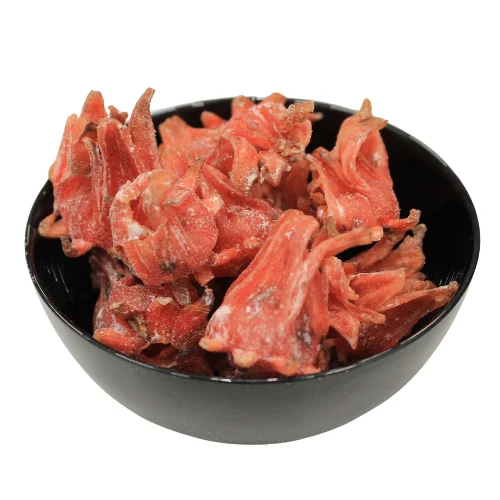


Dried hibiscus flower Emerosa 250g
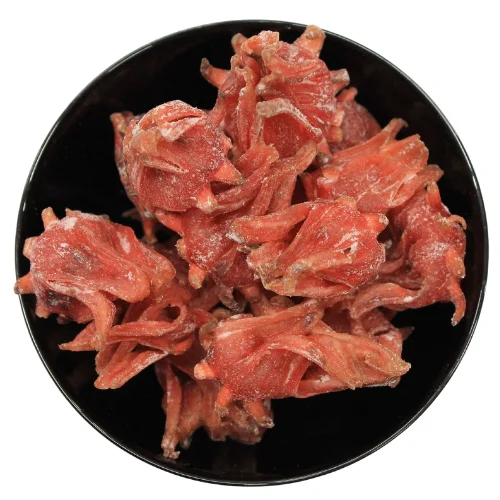
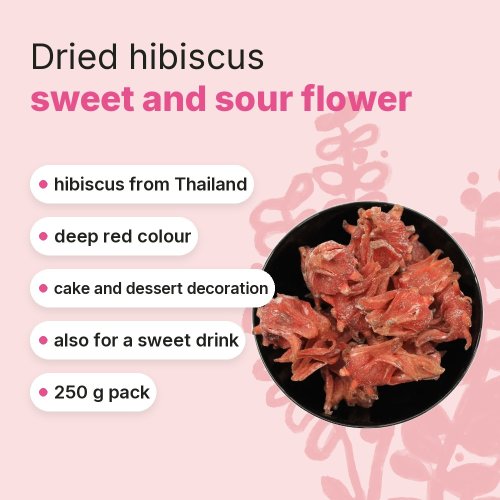
Dried hibiscus flowers from Thailand, sweetened with sugar, with a deep red colour and a sweet and sour taste. They are good as a sweet, a dessert decoration and for a sweet red drink. Customers buy them again and again. Contain the colour E129 and sulphur dioxide. 250 g pack.

Why shop at Emerosa?
-

Loyalty program
We reward each product review.
-

Expert advice
We provide the best quality of services and products.
-

Reliability of delivery
Own warehouses guarantee speed and reliability of delivery.
-

Our products
We create quality products for you
-

Shop and save
Get up to 10% discount
-
Free shipping
for purchases over €60
-

Satisfaction guarantee
Does it not fit? Give it back.
-

Review reward
Review = up to € 1.2 back.
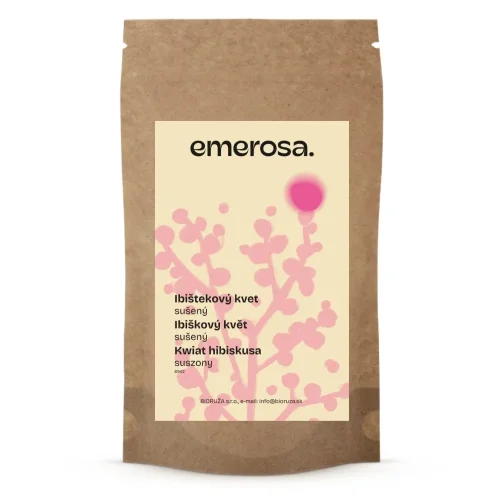
Dried hibiscus flower Emerosa 250g
Dried hibiscus flowers from Thailand, sweetened with sugar. They have a deep red colour and a sweet and sour taste. You eat them as a sweet, use them to decorate desserts or pour hot water over them for a sweet red drink. Customers buy them again and again.
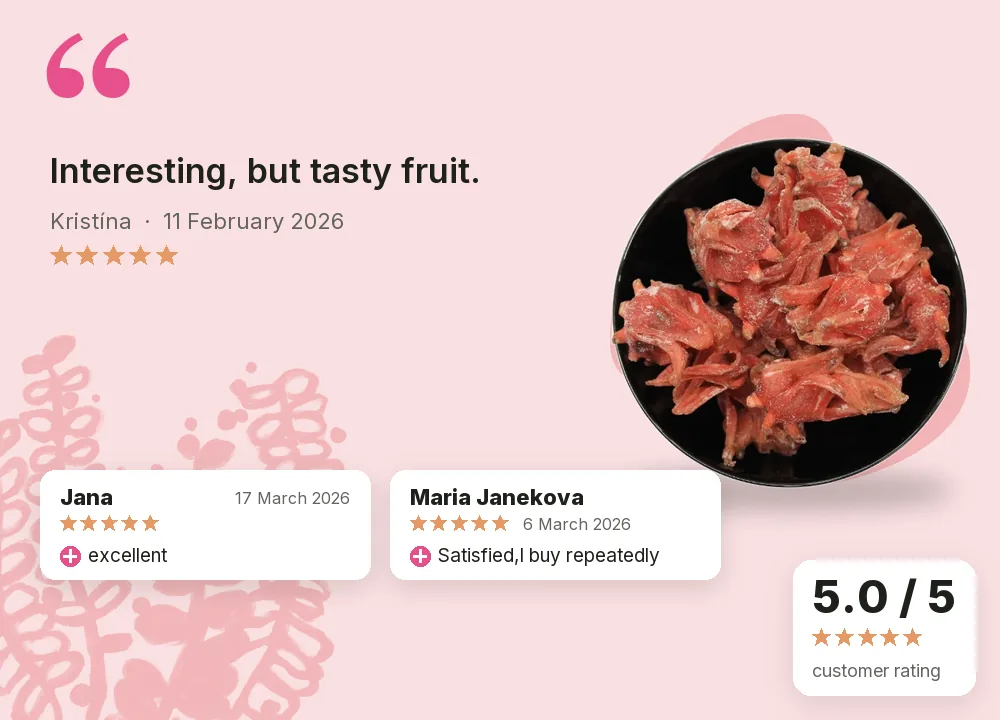
5.0 / 5
customer rating
Thailand
country of origin
250 g
pack
12
months shelf life
A sweet and sour flower with a striking red colour
Hibiscus naturally has a tangy taste. Sweetening it with sugar turns it into a sweet and sour treat. The flowers are dark red and stand out nicely on a cake, in a glass and in a bowl with nuts. One customer describes them as an interesting but tasty fruit.
As a sweet
A few flowers with coffee instead of sweets.
As decoration
A red flower on a cake, whipped cream or quark cream.
In a drink
Pour boiling water over them and leave to steep. The drink will be sweet and red.
In a gift pack
In a gift jar with nuts and chocolate.
What dried hibiscus is good for and how to use it
A cake needs a colourful decoration: hibiscus does not release juice. How to: arrange the flowers on the cream just before serving. They stay dry and deep red.
You want a red drink like hibiscus or bissap: pour water over the flowers. How to: put 3 to 4 flowers in a mug, pour boiling water over them and leave to steep for 5 to 10 minutes. The drink is already sweet from the sugar on the flowers, so do not sweeten it. You can also serve it chilled with ice and lemon.
A craving for something sweet: a few flowers instead of jelly sweets. How to: pour a handful, about 30 g, into a bowl and close the pack. A handful has about 105 kcal and 24 g of sugars.
Sensitivity to sulphites or colours: check the ingredients. How to: the hibiscus contains sulphur dioxide and the colour E129. If you react to them, choose cut roselle hibiscus for tea.
Hibiscus sweetened with sugar, with the colour E129
The hibiscus flowers are sweetened during processing and then dried. Hibiscus makes up 50.8 % of the ingredients and sugar 48 %, so the flowers are mainly a sweet.
The ingredients also include citric acid, the colour E129 and the preservative sulphur dioxide. The colour E129 may have an adverse effect on activity and attention in children. Sulphur dioxide (E220) is a preservative. Thanks to it, the fruit does not darken and keeps longer. People sensitive to sulphites should not eat it. The hibiscus comes from Thailand. We sell it in a 250 g pack, the shelf life is 12 months.
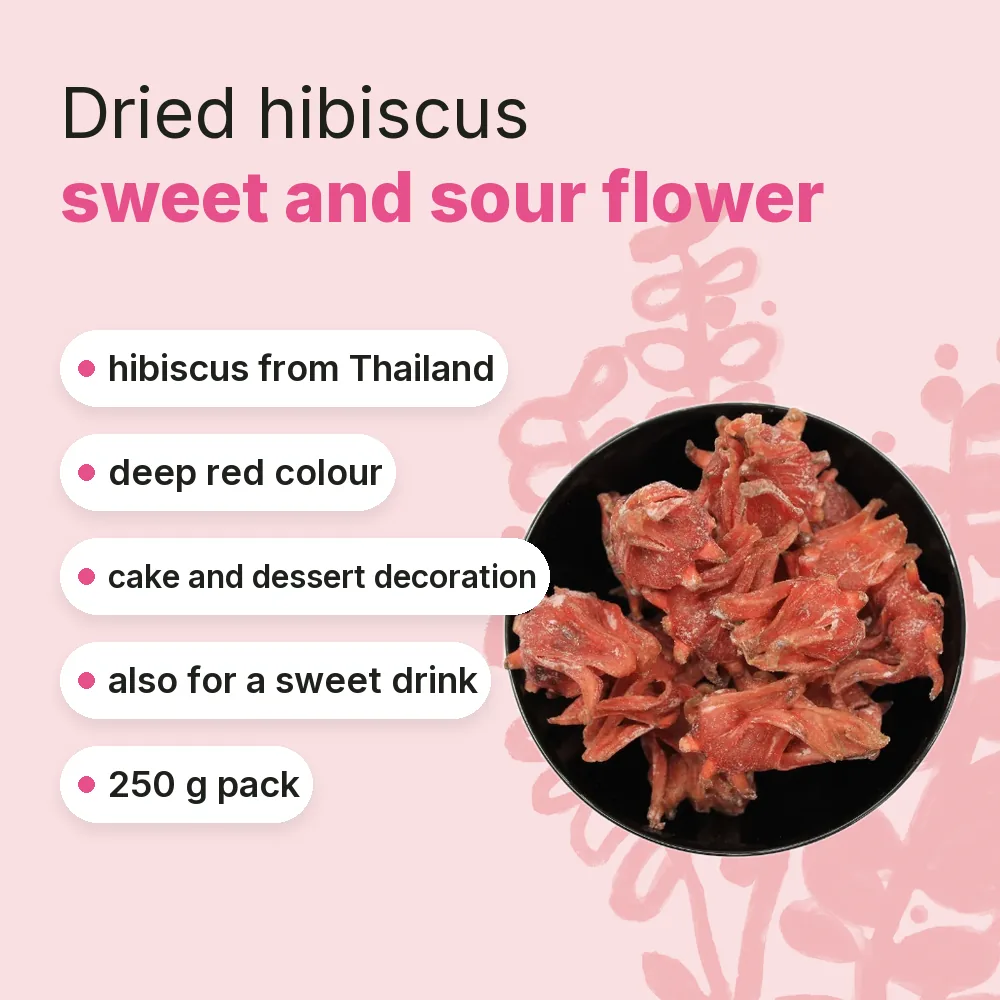
Sweetened hibiscus for snacking, cut hibiscus for tea
We also have hibiscus as a cut dried flower for tea. Sweetened hibiscus is a treat and a decoration, the cut flower is for steeping tea.
| Emerosa | What is in the pack | What it is good for |
| Hibiscus flower (this product) | hibiscus, sugar 48 %, colour E129, sulphur dioxide | sweet and sour decoration, sweet drink |
| Roselle hibiscus, cut flower | cut dried flower | for tea |
| Strawberries | strawberries, sugar 48 %, colour, sulphur dioxide | a sweet, dessert decoration |
| Ginger slices | ginger, sugar 49 %, sulphur dioxide | a spicy sweet, in tea |
| Papaya pieces | papaya, sugar 48 %, sulphur dioxide | in muesli and nut mixes |
Cold hibiscus drink in 3 steps
A litre of red drink for summer or a party.
1 · Pour
Pour 1 l of boiling water over 10 flowers.
2 · Steep
Leave to steep for 10 minutes, then remove the flowers with a spoon.
3 · Chill
Let the drink cool, add lemon slices and ice.
Do not sweeten the drink, the flowers are sweetened with sugar. You can eat the steeped flowers.
On a cake, in a drink and in a gift
Dried hibiscus is good wherever you want a sweet and sour taste and a red colour. It goes well with white chocolate, vanilla, whipped cream, quark, lemon and mint.
Cake
On top of the cream or around the edge of a cake.
White chocolate
Chop the flowers and sprinkle them into melted white chocolate.
Iced drink
Steeped and chilled with lemon and mint.
Gift
Pour into a jar with nuts and you have a sweet gift.
One handful has about 105 kcal, it is a sweet
Sweetened hibiscus contains a lot of sugar, 80 g in 100 g. Most of it is added sugar. Treat it as a sweet and eat it in moderation, a few flowers with coffee or as a decoration are enough. Salt is not stated in our data.
| Nutritional values | 100 g | 30 g (handful) |
| Energy | 1 465 kJ / 350 kcal | 440 kJ / 105 kcal |
| Fat | 0.0 g | 0.0 g |
| of which saturates | 0.0 g | 0.0 g |
| Carbohydrate | 88.0 g | 26.4 g |
| of which sugars | 80.0 g | 24.0 g |
| Fibre | 1.0 g | 0.3 g |
| Protein | 0.0 g | 0.0 g |
| Salt | not stated | not stated |
Technical information
| Ingredients | hibiscus 50.77 %, sugar 48 %, antioxidant: citric acid (E330) 1.2 %, colour E129 0.02 %, preservative E220: sulphur dioxide 0.01 % |
| Country of origin | Thailand |
| Packaging | 250 g |
| Allergens | contains sulphur dioxide and sulphites |
| Warning | the colour E129 may have an adverse effect on activity and attention in children |
| Shelf life | 12 months |
| Storage | in a cool, dry place at 2 to 25 °C, humidity up to 70 % |
| Brand | Emerosa |
It stays soft and fragrant when you protect it from air
Dried fruit gradually dries out and hardens in the air. In humidity, on the other hand, it absorbs water and the pieces stick together. Close the pack well after opening so that the fruit does not dry out or absorb kitchen smells. Store it in a cool, dry place at a temperature of 2 to 25 °C and humidity up to 70 %.
You will find more kinds in the category Dried fruit. You will find hibiscus for tea with no added sugar and other herbs in the category Loose herbs.
Frequently asked questions
+Is the dried hibiscus sweetened?
Yes. Sugar makes up 48 % of the ingredients and hibiscus 50.8 %. Per 100 g it contains 80 g of sugars, so treat it as a sweet.
+Does dried hibiscus contain colours or sulphites?
Yes. It contains the colour E129 and the preservative sulphur dioxide. The colour E129 may have an adverse effect on activity and attention in children. If you want hibiscus without additives, choose cut roselle hibiscus for tea.
+Can sweetened hibiscus be used to make tea?
Yes. Pour boiling water over 3 to 4 flowers and leave to steep for 5 to 10 minutes. The drink will be sweet and red, do not add any more sugar.
INCI
Hibiscus (50.77%), sugar (48%), antioxidant citric acid E330 (1.2%), dye E129 (0.02%), preservative E220: sulfur dioxide (0.01%)
| ❀ Product Category | Nuts, dried and freeze-dried fruit |
|---|
Jana
Positivesvýborný
Maria Janekova
PositivesSpokojnost,kupujem opakovane
Kristína
PositivesZaujímavé, ale chutné ovocie.
Related products8
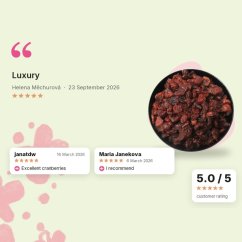
Whole dried cranberries Emerosa
In stock
from 5,04 € 5.04 EUR
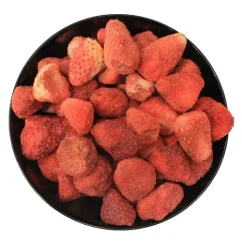
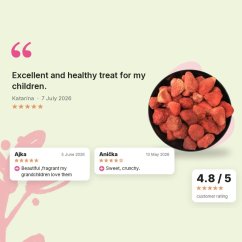
Whole lyophilized strawberries Emerosa
In stock
3,48 € 3.48 EUR
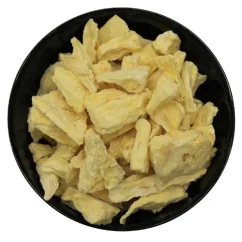
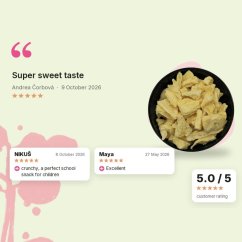
Freeze-dried pineapple pieces Emerosa
In stock
from 4,16 € 4.16 EUR
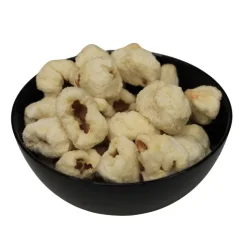
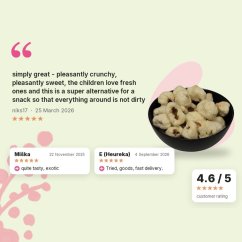
Lyophilized lychee whole Emerosa
In stock
from 5,83 € 5.83 EUR
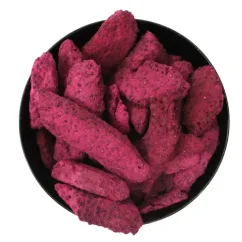
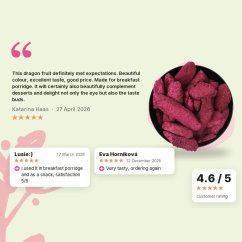
Lyophilized dragon fruit Emerosa
In stock
from 3,50 € 3.5 EUR
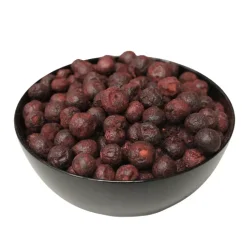
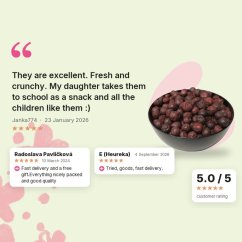
Whole lyophilized blueberries Emerosa
In stock
from 4,16 € 4.16 EUR
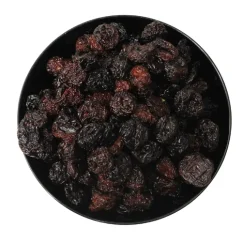
Dried cherries without added sugar and preservatives Emerosa
In stock
from 18,08 € 18.08 EUR
Dried apricot slices Emerosa
In stock
from 9,27 € 9.27 EUR