
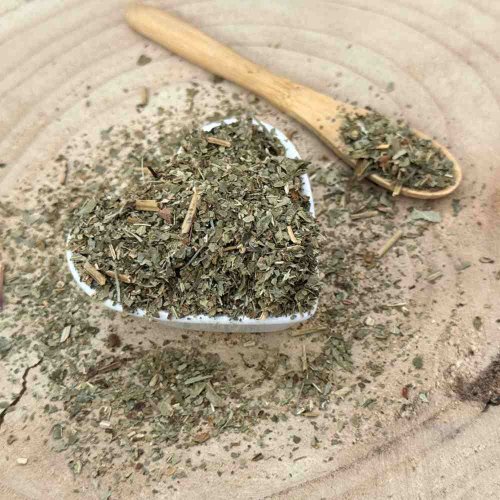
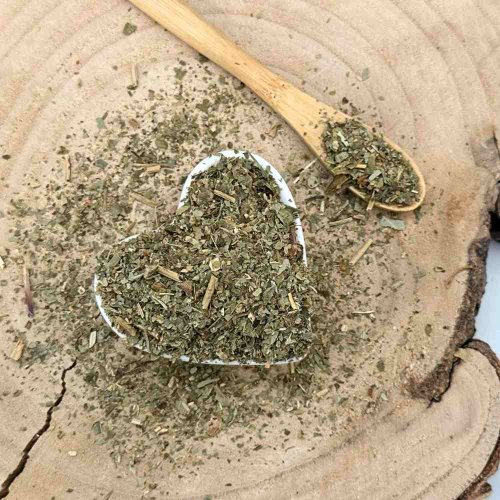
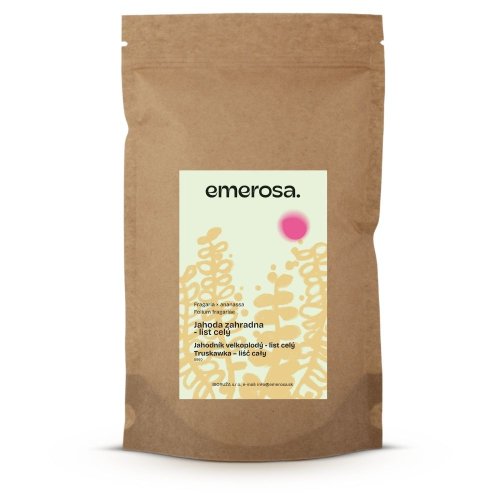


Garden strawberry - whole leaf - Fragaria × ananassa - Folium fragariae Emerosa
Strawberry leaf has long been known by our grandmothers as a natural home substitute for black tea. Dried whole garden strawberry leaves have a slightly astringent taste and are caffeine-free. They naturally contain tannins and flavonoids. In traditional herbal medicine, it was drunk to treat diarrhoea and added to tea blends. It also serves as a perfect base for homemade fruit and herbal teas.

Why shop at Emerosa?
-

Loyalty program
We reward each product review.
-

Expert advice
We provide the best quality of services and products.
-

Reliability of delivery
Own warehouses guarantee speed and reliability of delivery.
-
Our products
We create quality products for you
-

Shop and save
Get up to 10% discount
-
Free shipping
for purchases over €60
-

Satisfaction guarantee
Does it not fit? Give it back.
-

Review reward
Review = up to € 1.2 back.
Garden strawberry - whole leaf - Fragaria × ananassa - Folium fragariae Emerosa
Garden strawberry (Fragaria × ananassa) is a perennial plant of the Rosaceae family. It originated in France in the 18th century by crossing two American species of strawberry. Today, it is the most widespread strawberry found in gardens. It has trifoliate serrated leaves, white flowers, and runners, which it uses to spread.
In herbalism, the leaves are harvested. They are dried whole. Strawberry leaf naturally contains tannins (ellagitannins), flavonoids, and a small amount of vitamin C. It is caffeine-free. The infusion has a golden-brown colour and a slightly astringent taste, reminiscent of black tea.
Properties and traditional use:
- Black tea substitute: Strawberry leaf was traditionally brewed at home instead of black tea. It tastes similar and contains no caffeine, so you can enjoy it in the evening as well.
- For diarrhoea: In folk herbalism, strawberry leaf tea was drunk to treat diarrhoea and an irritated stomach. Tannins help in this process.
- Mouthwash: The cooled infusion was used for gargling and rinsing the mouth.
- Base for tea blends: The leaf gives the blend a fuller taste and colour. It pairs well with raspberry leaf, blackberry leaf, and dried fruit.
- Whole leaves: The whole leaf retains its flavour longer than cut leaves.
How to use and prepare:
- Herbal infusion: Pour 250 ml of boiling water over 1 to 2 teaspoons of leaves (crush them in your palm before use). Let it brew for 10 minutes and strain. Leave to infuse for 10 minutes and strain.
- Stronger tea: A decoction was traditionally prepared for diarrhoea. Boil 2 teaspoons of leaves in 250 ml of water for 5 minutes.
- Herbal blend: Mix strawberry leaf with raspberry leaf, blackberry leaf, and apple cubes. This creates a homemade fruit tea.
- Mouthwash: Let the stronger infusion cool down and gargle.
Warning:
- Allergy: If you are allergic to strawberries, do not use strawberry leaf.
- Long-term consumption: Due to the tannin content, drink the tea for a maximum of 3 consecutive weeks, then take a break.
- Pregnancy and breastfeeding: Consult a doctor regarding use during pregnancy and breastfeeding.
- Storage: Store in a dry, dark place in a well-closed container.
Country of Origin: according to current batch
Wholesale Cooperation: If you are interested in larger quantities or wholesale cooperation, please do not hesitate to contact us. You can find contact details for our sales representatives and more information here: https://www.emerosa.com/wholesale-sales
Recipes and Tips: For recipes on how to use herbs, how to prepare herbal tea, tinctures, ointments and more, read our article here: https://www.emerosa.sk/a/bylinne-pripravky-alebo-ako-pouzivat-susene-byliny
INCI
Strawberry leaf, whole (Fragaria × ananassa Duch.) 100 %
| ❀ Product Category | Loose herbs and teas |
|---|---|
| Form | whole |