
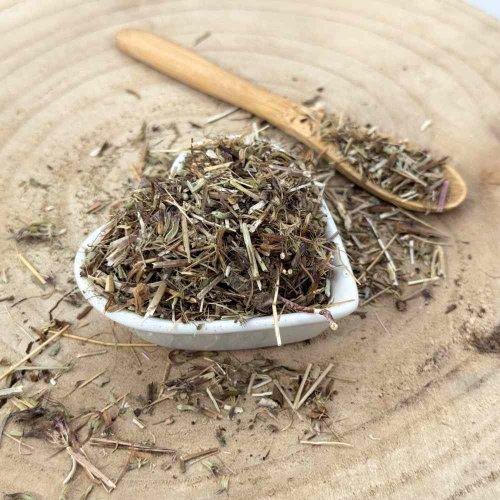
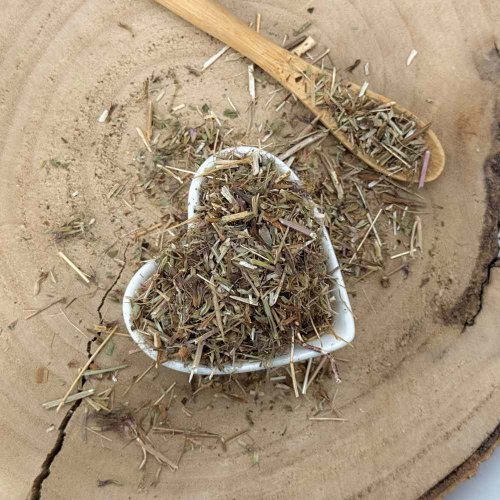
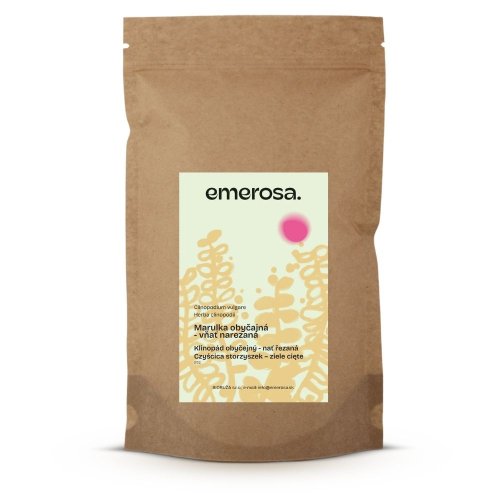


Wild Basil - Cut Herb - Clinopodium vulgare - Herba clinopodii Emerosa
Common Calamint, also known as common marjoram or wild basil, grows on the edges of forests and in sunny meadows. When cut fresh, it has a fragrance reminiscent of a blend of thyme and mint. In traditional herbalism, it was drunk to soothe an upset stomach and bloating, and was also used as a gargle. It is ideal for teas, herbal blends, and as a seasoning for meat and legumes.

Why shop at Emerosa?
-

Loyalty program
We reward each product review.
-

Expert advice
We provide the best quality of services and products.
-

Reliability of delivery
Own warehouses guarantee speed and reliability of delivery.
-

Our products
We create quality products for you
-

Shop and save
Get up to 10% discount
-
Free shipping
for purchases over €60
-

Satisfaction guarantee
Does it not fit? Give it back.
-

Review reward
Review = up to € 1.2 back.
Wild Basil - Cut Herb - Clinopodium vulgare - Herba clinopodii Emerosa
Wild Basil (Clinopodium vulgare), also known locally as common marulka, is a perennial herb from the Lamiaceae family. In English, it is known as wild basil. It grows on the edges of forests, on hedgerows and in sunny meadows. It reaches a height of 20 to 60 cm. It has a hairy square stem and pink-purple flowers that form rounded clusters around the stem.
The herb is harvested during flowering, from July to September. Once dried and cut, it smells like a blend of thyme and mint. It naturally contains tannins, flavonoids, rosmarinic acid, saponins and a small amount of essential oil.
Properties and traditional use:
- Tea after a heavy meal: In traditional herbal medicine, wild basil was drunk to relieve feelings of fullness and bloating.
- Mouthwash: Thanks to the tannins, the cooled infusion was used for gargling and rinsing the mouth.
- Minor injuries: Externally, the infusion was traditionally used as a compress for abrasions and minor wounds.
- Meadow seasoning: Dried herb enhances the flavour of meat, legumes, potatoes and herb butter.
- For herbal blends: It combines easily with mint, oregano or lemon balm.
How to use and prepare:
- Herbal infusion: Pour 250 ml of hot water over 1 to 2 teaspoons of leaves. Cover and let infuse for 10 minutes, then strain. The tea has a spicy taste with notes of thyme.
- Mouthwash: Prepare a stronger infusion using 2 teaspoons per 200 ml of water. Let it cool and gargle several times a day.
- In the kitchen: Add a pinch of the herb to goulash, bean soup, roasted meat or herb butter. Add it to the food 5 minutes before the end of cooking.
- Herbal blend: You can mix wild basil with mint, oregano, lemon balm or linden flower.
Warning:
- Pregnancy and breastfeeding: Consult a doctor regarding use during pregnancy and breastfeeding.
- Sensitive individuals: If you are taking medication or have health problems, please consult a doctor or pharmacist.
- Dosage: Drink a maximum of 2 to 3 cups per day and drink the tea for a maximum of 3 consecutive weeks.
- Storage: Store in a dry, dark place in a well-closed container.
Country of Origin: according to current batch
Wholesale Cooperation: If you are interested in larger quantities or wholesale cooperation, please do not hesitate to contact us. Contacts for our sales representatives and more information can be found here: https://www.emerosa.com/wholesale-sales
Recipes and Tips: For recipes on how to use herbs, how to prepare herbal tea, tinctures, ointments and more, read our article here: https://www.emerosa.sk/a/bylinne-pripravky-alebo-ako-pouzivat-susene-byliny
INCI
Wild basil herb, cut (Clinopodium vulgare L.) 100 %
| ❀ Product Category | Loose herbs and teas |
|---|---|
| Form | cut |